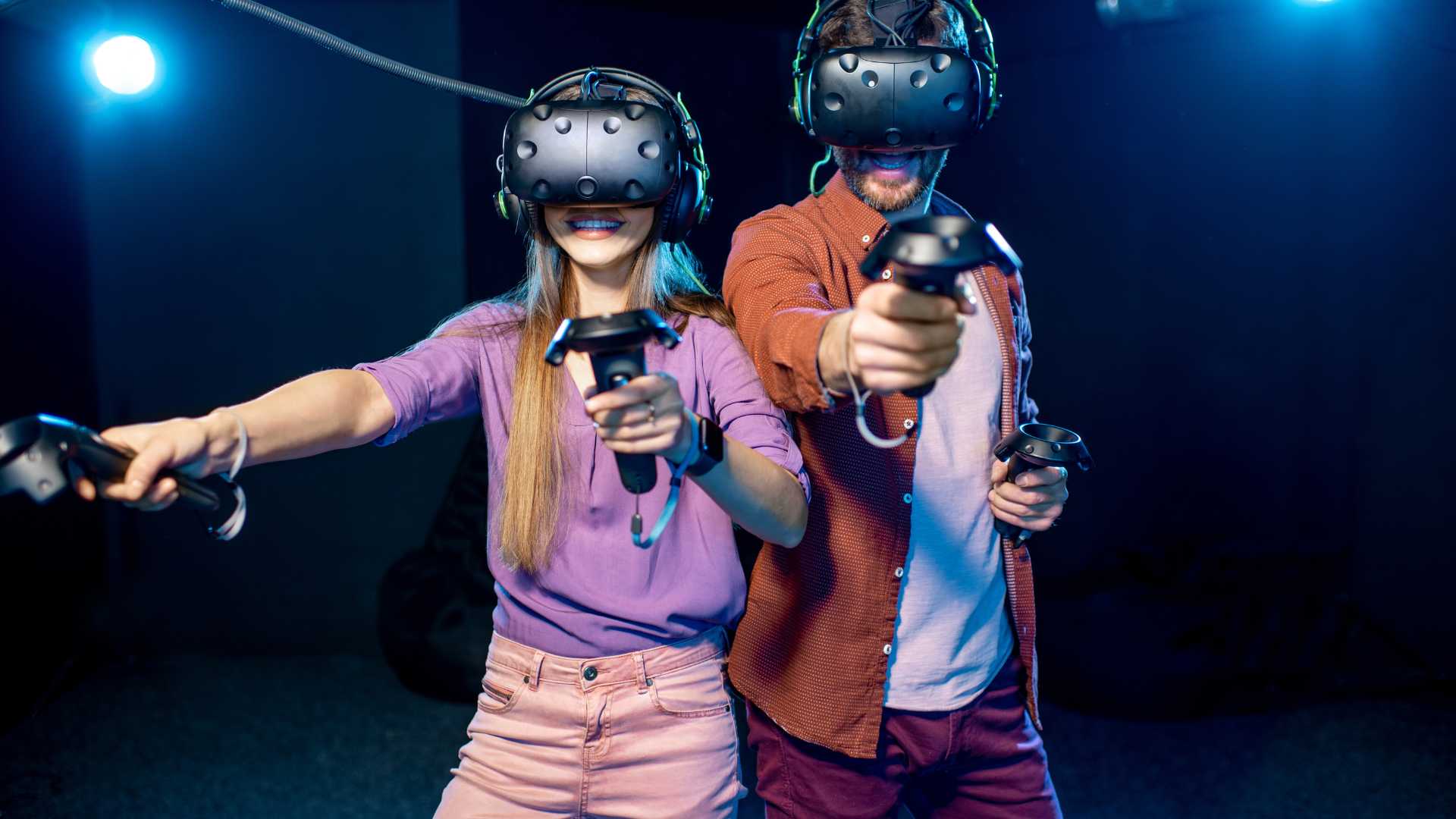
Virtual Reality (VR) technology is no longer a futuristic concept; it is a mainstream entertainment medium that offers profound immersion unlike traditional video games. For parents, the sudden proliferation of headsets and VR gaming options brings both excitement and questions: Is it safe for my kids? What are the appropriate age guidelines? How do I choose content that is enriching, not overwhelming?
As the premier destination for immersive VR games Ottawa, we understand these concerns completely. This comprehensive guide is designed to equip you with the knowledge necessary to navigate the world of virtual reality, ensuring a safe, fun, and beneficial VR game experience for your children and family.
What is Virtual Reality Arcade Game?
Virtual Reality involves placing a screen close to the eyes and using precise tracking technology to trick the brain into believing it is present in a 3D environment. This immersion is the magic, but it requires specific safety protocols, especially when children are involved.
Key Safety Considerations for Parents:
The Guardian Role: VR is not a drop-and-go activity for kids. A parent or responsible adult must always supervise the VR experience, especially regarding physical movement.
Chaperone System and Play Space: Modern VR systems utilize “Chaperone” or “Guardian” boundary systems, which outline the safe physical play area. When utilizing VR games in Ottawa at a professional facility, this area is meticulously mapped and often padded. If playing at home, ensure the child has at least a 6.5ft x 6.5ft clear space, free of furniture, pets, or tripping hazards (like cables).
Tethered vs. Standalone: Standalone units (like the Meta Quest series) are wire-free and generally safer for movement, reducing tripping risks. Tethered systems offer superior graphic performance but require strict cable management, usually handled by professional staff to ensure smooth play.
Ensuring the physical environment is secure is the foundational step to making any VR game age-appropriate and safe for younger players.
Is VR Game Age Appropriate?
This is arguably the most common concern for parents investigating virtual reality. Unfortunately, there is no universal law, but there is strong consensus from manufacturers and developmental experts.
Manufacturer Recommendations (The 13+ Guideline)
Most major VR hardware manufacturers (Meta/Oculus, Sony PlayStation VR) recommend a minimum age of 13 years old for their primary headsets. This recommendation is primarily driven by three factors:
Liability and Data Collection: Accounts and profile management are often tied to adult consent.
Physical Fit: Headsets are generally designed for adult or teenage head sizes. Younger children may find them ill-fitting, leading to poor visual alignment (IPD issues) or discomfort.
Intensity of Experience: The immersive nature of VR can be emotionally intense, and content filtering is harder to manage than on a standard screen.
The Developmentally Appropriate Age (7-12 Years)
While the 13+ rule is often legally mandated for account creation, many quality VR games Ottawa arcades and educational programs safely accommodate children as young as 7 or 8. When considering if a VR game is age-appropriate for younger players, parents should consider:
Visual Convergence and IPD (Interpupillary Distance): Children’s eyes are still developing. Ensure the headset has adjustable IPD settings that match the child’s distance between pupils. Poor IPD settings can cause eye strain.
Emotional Maturity: Can the child distinguish between the virtual world and reality? Highly realistic, high-stakes games can cause anxiety. Content should be clearly fantastical, puzzle-based, or creative.
Session Length: Sessions must be significantly shorter for younger children—typically 15 to 25 minutes maximum, followed by a substantial break.
At Crazy Bear, we specialize in curating experiences specifically designed to be safe and accessible for younger players, allowing them to enjoy the magic of virtual reality in a monitored environment.
Choose Family & Kid-Friendly VR Game
The health impact of VR is often exaggerated, but legitimate physiological responses require management. Parents should be aware of these issues to ensure the VR session remains comfortable.
1. Minimizing Motion Sickness (Cybersickness)
Motion sickness occurs when the eyes see movement, but the inner ear (which handles balance) does not register corresponding physical motion. This sensory mismatch causes nausea, dizziness, and discomfort.
Choose the Right Games: Avoid games that use “artificial locomotion” (thumbstick movement). Opt for games that use “teleportation” or involve stationary activity (puzzles, shooting ranges, creation tools).
Short, Frequent Breaks: If a child expresses any discomfort, the headset must be removed immediately. Do not try to push through it.
Field of View Restriction: Some headsets or games offer settings to reduce the field of view during movement, which can lessen the impact of visual flow and mitigate nausea.
2. Addressing Potential Eye Strain
While extensive, poorly monitored screen time can affect vision, current research does not definitively link short, properly controlled VR sessions to long-term visual impairment in children. However, eye strain is common.
Manage Brightness: Ensure the headset is not set to maximum brightness.
Mandatory Breaks: Follow the 20-20-20 rule—every 20 minutes, look at something 20 feet away for 20 seconds. This is non-negotiable for young VR players.
Proper Fit: As mentioned, correct IPD adjustment and ensuring the headset sits snuggly (but not too tightly) prevent blurriness and visual discomfort.
3. Contextualizing VR Screen Time
VR is not equivalent to sitting motionless watching a movie. Many VR activities are physical, engaging the whole body. When calculating total screen time, parents should differentiate active VR (like boxing games or room-scale adventures) from passive screen time (watching TV).
For high-quality, physical VR games Ottawa families trust, the activity level often justifies the session length, provided breaks are taken.
4. Choosing the Best Children’s VR Games & Family Friendly Options
The vast library of VR games contains everything from intense horror to gentle educational tours. Selecting suitable content is paramount to a successful family VR experience.
Defining a Family & Kid Friendly VR Game:
A VR experience appropriate for families and children should adhere to these criteria:
Low Violence/Intensity: Focus on cartoonish graphics, puzzle-solving, creation, or sports. Avoid realistic shooters, blood, or jump scares.
Comfortable Locomotion: Games must utilize teleportation or simple, slow walking to prevent sickness.
Cooperative or Creative: Games that allow interaction with other players (multiplayer) or focus on building and creativity are highly recommended.
Examples of Best Children’s VR Games:
Creative & Artistic Tools: Applications that allow kids to paint in 3D space, build fantastical structures, or sculpt offer incredible sensory and creative input.
Puzzle and Escape Rooms: These are ideal for family cooperation, promoting communication and problem-solving in a non-threatening environment. They are typically stationary and comfort-rated high.
Educational Simulations: Traveling to historical sites, exploring the solar system, or diving under the ocean provides a level of engagement traditional classroom tools cannot match.
Rhythm and Music Games: Highly physical and purely fun, these games minimize motion sickness and maximize energy expenditure. They are fantastic Family & Kid Friendly VR Game options.
When selecting games, check the comfort ratings provided by the platform (usually categorized as Comfortable, Moderate, or Intense). Always stick to “Comfortable” or low “Moderate” for first-time players and children.
Home VR vs. Professional VR Arcades: What Makes the VR Game Experience at Crazy Bear Different?
For many parents, the choice comes down to buying a headset for home use or utilizing a dedicated, professional VR arcade.
The Limits of Home VR for Families
High Upfront Cost: Quality headsets, accessories, and a gaming PC (if necessary) represent a significant investment.
Safety Risks: Unmanaged cables, limited play space, and easily breakable household items increase risk for unsupervised children.
Limited Library Access: Purchasing individual games can be expensive, and system requirements vary widely.
The Advantages of a Professional VR Arcade in Ottawa
A high-quality VR arcade, such as Crazy Bear, eliminates the primary hurdles associated with family VR usage, offering the safest and highest-fidelity experience available for VR games in Ottawa:
Expert Supervision and Safety: Our trained staff manage cable safety, ensure equipment is properly sized for each child (including IPD adjustment), and monitor the physical movement of players.
Curated Content Library: We invest in the best children’s VR games and Family & Kid Friendly VR Game titles, already filtered for appropriate content, comfort, and duration.
High-End Performance: We use top-tier, wired VR setups that offer superior graphics and tracking compared to most home standalone units, providing a truly mind-blowing, optimized experience.
Cleanliness and Hygiene: Professional arcades rigorously sanitize headsets and controllers between every session, addressing parental concerns about shared equipment.
For a reliable, safe, and exciting introduction to VR, visiting a specialized location is the best choice. It allows your family to test the waters and enjoy cutting-edge technology without the commitment or liability of owning the equipment.
Beyond Entertainment: The Educational and Developmental Benefits of VR
VR is far more than just “screen time”; it is a powerful tool for cognitive and physical development when used correctly.
Physical Activity: Many of the most popular VR games require players to duck, lunge, swing, and step. This form of “exergaming” encourages movement and helps combat sedentary behavior.
Spatial Reasoning and Problem Solving: Interactive 3D puzzles and construction games significantly boost spatial awareness—a critical skill for math and engineering. Navigating complex virtual spaces improves orientation skills.
Empathy and Perspective: VR’s ability to create genuine presence allows users to step into scenarios from different perspectives, fostering empathy and cultural understanding in ways flat media cannot achieve.
Confidence and Social Skills: Cooperative VR multiplayer experiences encourage children to communicate clearly, strategize with their team, and achieve goals together. At Crazy Bear, group sessions are specifically designed to be highly social and interactive.
Virtual Reality offers incredible potential for entertainment, education, and exploration. While parental caution is justified, the risks associated with VR can be almost entirely mitigated through informed choices regarding content, duration, and environment.
For parents seeking the best, safest, and most memorable introduction to VR games Ottawa has to offer, a visit to Crazy Bear provides peace of mind. Our facility is designed around the principles of safety, comfort, and age-appropriate content, ensuring your child’s first steps into the virtual world are positive and exhilarating.
Ready to experience the future of family entertainment? Book your family-friendly VR adventure today and discover why we are the top destination for the best children’s VR games in Ottawa!