VR Arcade Ottawa for Kids and Families: What Parents Should Know Before Visiting
A child can be excited about VR before a parent has any idea what the experience will feel like. That gap is where most planning questions begin. Will the headset be comfortable? Will the game feel too intense? Will younger siblings have something else to do? Is VR worth adding to a family outing or birthday party?
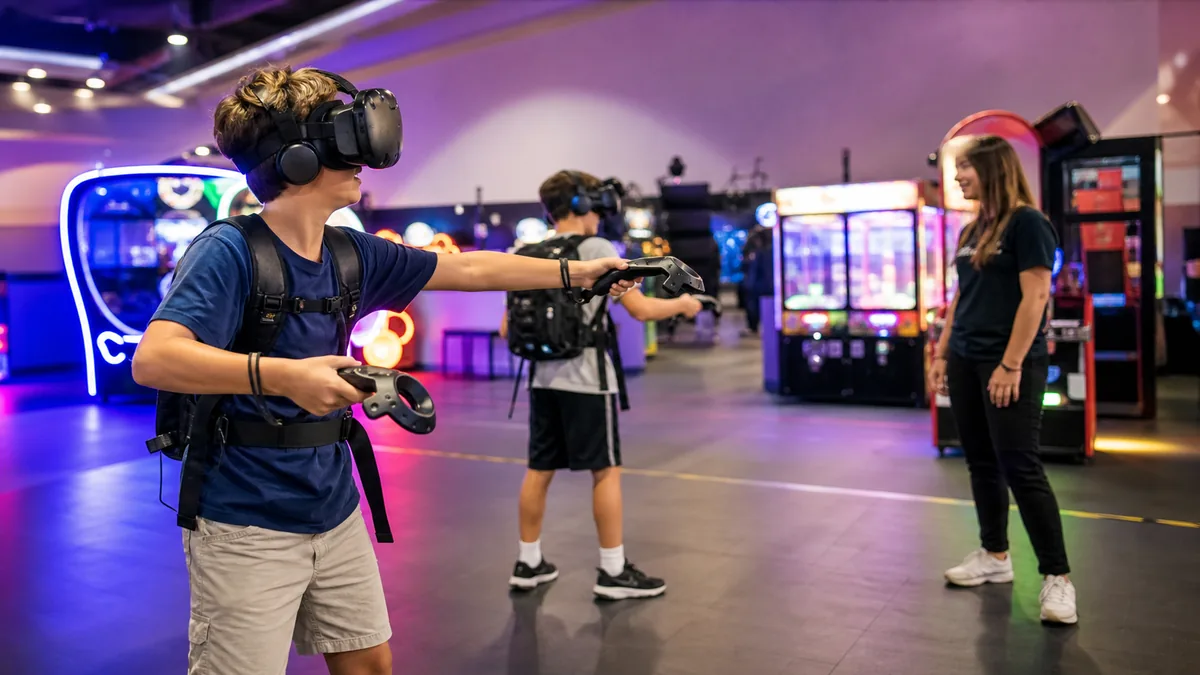
A VR arcade visit works best when parents treat it as a highlight inside a broader activity plan. At Crazy Bear, VR sits alongside arcade games, claw machines, and redemption prizes, so the day does not depend on every guest loving the same headset experience.
This guide is for Ottawa parents who are curious but practical. It explains how to think about age, comfort, timing, supervision, group flow, and the right next step before visiting.
VR Arcade Ottawa for Kids and Families: What Parents Should Know Before Visiting
First-Time VR: What Parents Notice Before Kids Do
Children often focus on the headset’s novelty. Parents notice the surroundings: space, staff guidance, other guests, waiting time, and whether the child seems comfortable. Those observations matter because VR is more immersive than a regular arcade screen.
A first VR experience should not be rushed. Give the child time to understand where they are standing, how the headset feels, and how to ask for help. If a player feels unsure, a shorter first session can be a better introduction than pushing through discomfort.
Parents should also watch for signs of sensory overload. A child may be thrilled at first and tired a few minutes later. That is normal. The best plan allows a pause without making the child feel they failed.
Because Crazy Bear offers other arcade activities nearby, a family can step away from VR and still continue the outing. That flexibility is valuable for first-time VR players.
Age Fit: Kids, Tweens, Teens, and Adults
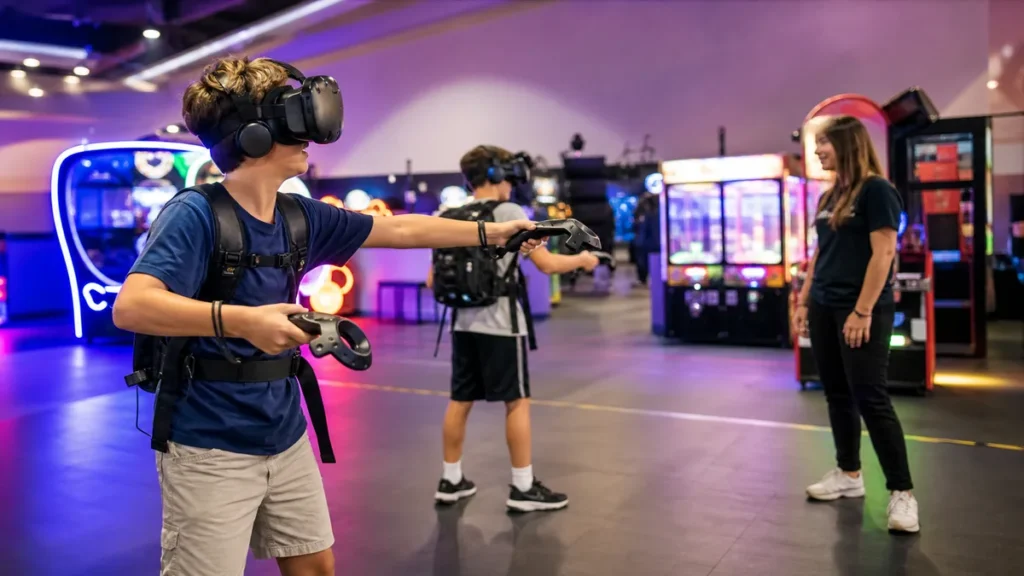
VR does not have one perfect age. Some younger children enjoy the novelty but need more help with instructions. Tweens often respond well because the experience feels grown-up without requiring complete independence. Teens may care more about challenge, realism, or sharing reactions with friends.
Adults can enjoy VR too, especially when they treat it as a shared family experiment rather than a children-only activity. Watching someone react to VR can be almost as entertaining as playing.
The best age decision depends on the child’s comfort with headsets, instructions, movement, and new environments. Parents know those signals better than any general rule.
For birthday groups, ask whether the guest of honour wants VR as the main highlight or simply as one option. That choice affects timing and how the rest of the group should be kept engaged.
| Signal | What it suggests | Parent response |
|---|---|---|
| Child follows game instructions comfortably | They may handle VR controls well | Start with a short session and check in. |
| Child dislikes headsets or tight gear | Comfort may be the limiting factor | Let them watch first or choose another activity. |
| Guest group includes mixed ages | Not everyone will want VR | Pair VR with arcade games and prizes. |
| Birthday child wants a memorable highlight | VR can anchor part of the event | Plan rotations so nobody waits too long. |
Comfort, Motion, and Breaks
Some players feel completely comfortable in VR. Others may feel warm, dizzy, nervous, or visually overloaded. Parents should normalize breaks before the session begins so that stopping does not feel embarrassing.
A simple rule works well: try it, pause if needed, and switch activities if the body says no. A good outing does not require every child to finish the same experience. The point is to create a positive memory, not to prove endurance.
Hydration and rest matter, especially when VR is part of a longer arcade visit. Plan a short break after headset play before moving into claw machines, food, or another round of games.
If a child is prone to motion sensitivity, start with a gentler experience when available and keep the first attempt short. Parents should follow staff guidance and current venue rules.
How VR Fits Into an Arcade Visit
VR works best when it is placed thoughtfully in the setting. Starting with regular arcade games lets guests settle in. Trying VR in the middle gives the visit a memorable peak. Ending with prizes or food gives the group a calmer finish.
For families with siblings, this order prevents one child’s VR interest from dominating the day. A sibling who does not want the headset can still enjoy arcade games or claw machines while others take turns.
For birthday parties, VR should be paired with other activities so waiting guests are not left watching without options. A host can rotate players while the rest of the group continues on the arcade floor. The key is to avoid making the entire plan depend on one experience. VR is strongest as a feature, not a bottleneck.
Questions to Ask Before a VR Birthday Party
Parents planning a birthday should ask whether VR is suitable for the guest list, not only for the birthday child. A child who loves VR may invite guests who are nervous about headsets or prefer other games. The plan should leave room for both reactions.
Ask how many guests can participate at a time, how long the VR portion usually takes, and where the rest of the group will be while waiting. Also confirm how food, cake, and party room timing fit around the activity.
If guests are being dropped off, parents may appreciate knowing that VR is part of the party. A short note on the invitation can prevent surprises and gives families a chance to mention comfort concerns.
A VR party works best when the host treats it as a shared highlight. Guests can talk about what they tried, compare reactions, and then move on to food or other games.
VR is most enjoyable when children know they can pause without disappointing anyone.
Why VR Appeals to Tweens and Teens
Tweens and teens often want birthday activities that feel more mature than a playground but less formal than a dinner or event hall. VR can fit that middle space because it feels current, social, and a little more independent.
The experience also gives the group something to talk about. Players describe what they saw, friends react from nearby, and the activity becomes part of the party story. That social layer is important for older kids.
At the same time, teens may not want every minute scheduled. A flexible arcade setting allows them to move between VR, games, claw machines, and food without feeling overmanaged.
Parents get a practical benefit too: the venue contains the activity, while the group still feels like it has choices.
| Moment | Good use | Why |
|---|---|---|
| Beginning | Quick trial for confident players | Builds excitement early. |
| Middle | Main highlight after the group settles | Often the smoothest family option. |
| After food | Shorter final experience | Works for teens, less ideal for tired young kids. |
| Backup choice | Use only if the child is ready | Keeps pressure low. |
Safety-Minded Planning Without Killing the Fun
Parents can be careful without making the visit feel tense. The best approach is to explain expectations calmly: listen to staff, stay aware of space, speak up if the headset feels uncomfortable, and take breaks when needed.
Avoid framing VR as something a child must push through. That pressure can turn a fun activity into a test. Give children permission to stop, switch games, or watch a friend play.
A parent should also consider the full outing. If the child is already tired, hungry, or overstimulated, save VR for another visit or place it earlier in the schedule.
Good planning protects the fun by making discomfort easy to solve.
For mixed-age families, the strongest VR plan includes something equally good for the guest who skips the headset.
Plan the Next Step
Families comparing VR options can review Crazy Bear VR games information for the main-site context and the Arcade VR page for venue-specific details.
If VR is part of a birthday plan, connect it with party room planning and check current pricing information before setting guest expectations.
Parents should make the decision based on the group, not on novelty alone. VR is a strong option when the child is curious, the group has other activities available, and the schedule leaves space for breaks.
The result is a visit that feels exciting without putting unnecessary pressure on any one guest.
A birthday VR activity should create a shared story, not a waiting line.
How to Introduce VR to Your Children
A parent can make VR easier before the headset ever goes on. Explain that the child can try it, pause, ask for help, or stop. That permission matters because some children worry that stopping will disappoint the adults who planned the visit. Removing that pressure makes the experience feel safer.
Let the child watch another player when possible. Watching helps them understand movement, reactions, and the fact that the person in the headset is still standing in a real space. For cautious children, observation can turn uncertainty into curiosity.
After the first attempt, ask specific questions instead of a broad “Did you like it?” Better questions include: Was the headset comfortable? Did anything feel too fast? Would you want a shorter or longer turn next time? Those answers help parents decide whether VR should become a larger part of future visits.
If the child decides VR is not for them that day, the outing can still succeed. Arcade games, claw machines, and prizes give the family other ways to enjoy the visit without turning the headset into a test.
Planning VR for Siblings and Friends
Siblings often approach VR differently. One may be eager, and another may be hesitant. A parent should avoid comparing them. The confident child can have a turn while the cautious child chooses a different arcade activity. Later, the cautious child may decide to try after watching.
Friend groups add another layer because children may perform confidence for each other. A child might say yes to VR because everyone else is excited, then feel uncomfortable once the headset is on. Hosts should make it normal for guests to choose another game.
For birthdays, the schedule should not strand non-VR guests. While one or two players take turns, the rest of the group should have arcade games, claw machines, food, or prize planning available. That keeps the party energy moving.
VR becomes easier to manage when it is treated as one station in a larger entertainment plan. Nobody has to carry the whole event, and every guest can still find a way to participate.
After the VR Session
The moments after VR are useful. Some children want to talk immediately about what they saw. Others need a quieter reset. A parent who leaves space for both reactions will get a better read on whether the experience was positive.
Switching to a lower-intensity activity after VR often works well. Claw machines, ticket games, or a snack break can help the child return to the room’s normal pace. Jumping straight into another intense activity may be too much for some players.
For teens, the after-session conversation can be part of the fun. They may compare reactions, laugh about surprising moments, or encourage another friend to try. That social layer is one reason VR can work well for older groups.
Parents should remember that a short first VR experience can still be a success. A child who leaves curious and comfortable is more likely to enjoy trying again later.
When VR Should Not Be the Main Event
VR is exciting, but it should not be the main event for every group. If several guests are nervous about headsets, if the group includes very young children, or if the schedule is already tight, VR may work better as an optional activity. That does not make the outing less successful. It makes the plan more realistic.
Parents should also be careful when the birthday child loves VR but the guests may not. A party works best when the main structure includes everyone. VR can still be special, but arcade games, claw machines, food, and prize time should carry the rest of the event.
If a child has had a long day, is hungry, or is already overstimulated, consider starting with calmer arcade play. VR can be saved for later or for another visit. A child who tries VR while tired may judge the entire experience unfairly.
The best choice is the one that keeps curiosity intact. Leaving VR for a better moment is often wiser than forcing it into a day that is already full.
What Parents Can Watch From the Sidelines
Parents do not need to understand every game mechanic to supervise well. Watch posture, comfort, confidence, and whether the child can follow guidance. A child who is smiling but physically unsure may need a pause. A child who is quiet afterward may need a calmer transition.
Pay attention to the group around the player, too. Friends may crowd, shout advice, or increase pressure without meaning to. A little space can help the player enjoy the experience more comfortably.
After the turn, ask what felt fun and what felt strange. These details help parents decide whether to plan a longer VR session next time, keep it short, or focus on other arcade activities.
Good supervision is not about interrupting the experience. It is about noticing when the child needs support before they have to ask for it.
FAQ
Are VR arcades worth it for kids and families?
They can be worth it when VR is part of a broader arcade visit with other activities available for breaks or different comfort levels.
Can VR make children dizzy?
Some players may feel dizzy or uncomfortable. Parents should encourage short sessions, breaks, and stopping if needed.
Is VR better for tweens and teens?
Tweens and teens often enjoy VR because it feels immersive and social, but suitability depends on the child.
Can VR work at a birthday party?
Yes, if it is planned with rotations and other arcade activities, so guests are not left waiting.
Where can families try VR arcade games in Ottawa?
Crazy Bear Amusement in Nepean offers VR alongside arcade games, claw machines, and redemption prizes.
Next Step
If VR sounds right for your child or group, plan it as one strong part of the outing rather than the only activity. Check out more details at Crazy Bear.